
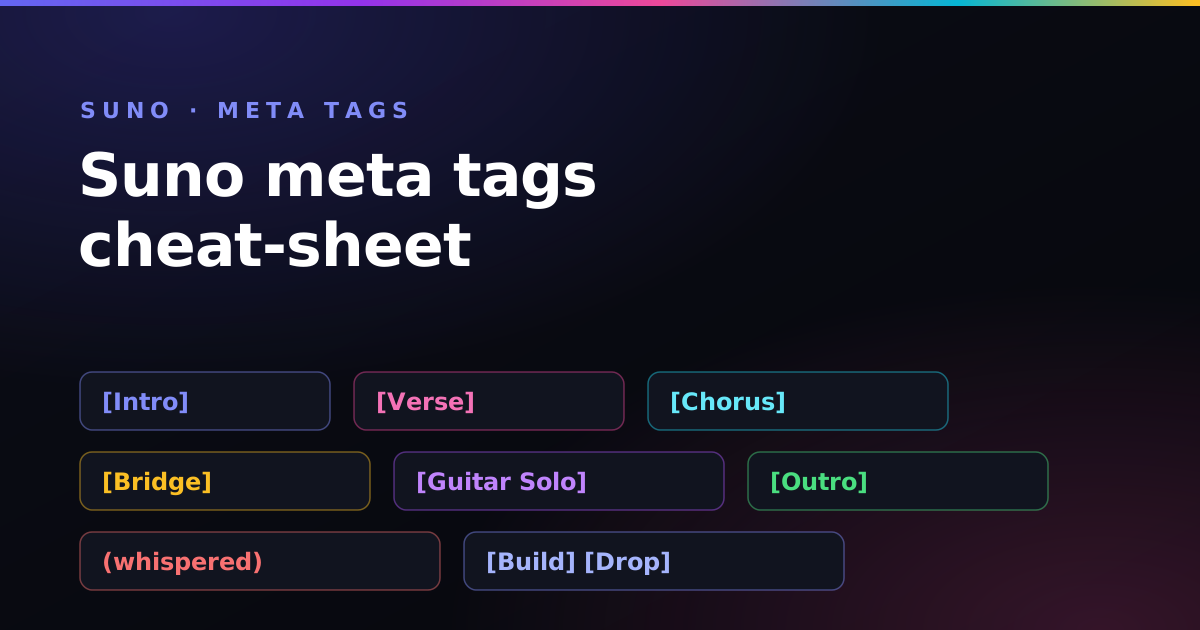
Meta tags are the bracketed stage directions you drop into Suno’s lyrics box to shape structure and performance. They are not sung. Here are the ones that reliably work, grouped by job — tap any tag to copy it.
How to use this list
- Structure & performance tags go in the lyrics box, in square brackets, on their own lines
- Style descriptors (genre, mood, instruments, tempo) go in the Style of Music box, comma-separated
- Tags are hints, not switches — Suno interprets them, so test and adjust
- Keep each bracketed tag on its own line with blank lines around it
- Tap any tag below to copy just that tag, or use a box’s Copy button to grab the whole group
1. Song-structure tags
The backbone. These mark sections so Suno knows where the energy should rise and fall. Place each on its own line in the lyrics box.
[Intro]
[Verse]   [Verse 1]   [Verse 2]
[Pre-Chorus]
[Chorus]
[Post-Chorus]
[Bridge]
[Refrain]
[Hook]
[Breakdown]
[Drop]
[Interlude]
[Outro]
[End]
2. Vocal & performance tags
Direct who sings and how. Bracketed cues steer the delivery; parentheses are best for backing vocals and ad-libs that sit under the lead.
[Male Vocal]   [Female Vocal]   [Duet]
[Spoken Word]   [Whispered]   [Belting]
[Soft Vocal]   [Aggressive Vocal]   [Falsetto]
[Harmonies]   [Choir]   [Call and Response]
[Ad-lib]
(backing vocals)   (oohs and aahs)   (echo)
3. Instrument & solo tags
Hand the spotlight to a player. Pair the instrument with a short character so Suno knows the mood of the solo, then leave a blank line after it.
[Guitar Solo, energetic distorted bends]
[Piano Solo]
[Saxophone Solo]
[Synth Lead]
[Drum Break]
[Bass Drop]
[Instrumental Break]
[Acappella]
4. Dynamic & effect tags
Shape intensity and transitions. Use these sparingly — one well-placed dynamic cue lands harder than five stacked together.
[Build Up]   [Climax]   [Fade Out]
[Tempo Up]   [Half-Time]   [Key Change]
[Big Finish]   [Soft Ending]
[Beat Switch]
5. Style-box descriptors (not bracketed)
These live in the separate Style of Music box, not the lyrics, and they are written as plain comma-separated tags rather than in brackets. Order them strongest-first.
genre · sub-genre · mood · lead instrument · production texture · vocal type · tempo (e.g. 120 bpm)
The full reasoning behind that order is in how to write a Suno style prompt, and tempo ranges by genre are in the BPM cheat-sheet.
Putting it together
A tagged lyric sheet might open like this — structure markers and a performance cue doing their jobs around the words:
[Intro]

[Verse 1]
the city hums a quiet tune tonight
(soft backing vocals)

[Pre-Chorus]
and everything is rising into light

[Chorus]
hold on, hold on

[Guitar Solo, soaring melodic bends]
For the deeper logic of how brackets, parentheses and section labels interact, read Suno song structure and vocal tags. To see a complete tagged sheet with chords, the song builder makes one in three taps. This reference is part of the complete guide to Suno prompting.
Quick reference: the most-used tags
If you only learn a dozen tags, learn these. The table shows what each one does and which box it belongs in:
| Tag | What it does | Where it goes |
|---|---|---|
[Intro] | Opens the song, usually instrumental or sparse | Lyrics box |
[Verse] | Story section; lower energy than the chorus | Lyrics box |
[Pre-Chorus] | Builds tension into the chorus | Lyrics box |
[Chorus] | The main, repeated, highest-energy section | Lyrics box |
[Bridge] | A contrasting section before the final chorus | Lyrics box |
[Outro] / [End] | Winds the song down and signals a clean finish | Lyrics box |
[Female Vocal] | Asks for a female lead on the following lines | Lyrics box |
[Guitar Solo] | Hands the section to an instrument, no vocals | Lyrics box, blank line below |
[Build Up] / [Drop] | Raises tension, then releases it (electronic styles) | Lyrics box |
[Fade Out] | Ends on a gradual fade instead of a hard stop | Lyrics box |
(backing vocals) | Adds a second voice under the lead line | Lyrics box, in parentheses |
124 bpm | Sets the tempo | Style box, no brackets |
Tags that suit specific genres
Most structure tags work everywhere, but some only make sense in certain styles. Matching the tag to the genre gives Suno a cue it already expects:
- EDM, house, drum and bass:
[Build Up],[Drop],[Breakdown],[Bass Drop]. - Hip-hop, trap, drill:
[Hook]in place of[Chorus],[Ad-lib],[Beat Switch]. - Rock and metal:
[Guitar Solo],[Drum Break],[Big Finish]. - Ballads and acoustic:
[Soft Vocal],[Piano Solo],[Soft Ending],[Acappella]. - Gospel, choral, anthems:
[Choir],[Harmonies],[Call and Response],[Key Change].
For a ready-made prompt in each style, see the genre guides linked from the complete guide to Suno prompting.
Do’s and don’ts
| Do | Don’t |
|---|---|
| Put each bracketed tag on its own line | Write lyrics on the same line as a bracket |
| Use one or two cues per section | Stack five tags in a row and hope they all land |
Add a short description: [Guitar Solo, soaring bends] | Rely on vague cues like [Epic] or [Good Part] |
| Keep genre, mood and tempo in the style box | Put [Verse] or [Chorus] in the style box |
| Describe the sound you want | Name real artists — Suno filters artist names |
| Change one tag per re-roll | Rewrite everything at once, so you can’t tell what helped |

Paddy
Self-taught guitarist and independent AI-music hobbyist. These are the tags I reach for on my own Suno tracks — you can hear the results on the music page. More about Paddy.
Frequently asked questions
What are meta tags in Suno?
Meta tags are bracketed directions you place in the lyrics box, such as [Verse], [Chorus] or [Guitar Solo]. They tell Suno about structure and performance rather than supplying words to sing, so they are not voiced as lyrics.
Do Suno meta tags go in the style box or the lyrics box?
Structure and performance meta tags in square brackets go in the lyrics box, on their own lines. Genre, mood, instrumentation and tempo descriptors go in the separate Style of Music box as comma-separated tags.
Why are my Suno meta tags being sung out loud?
Usually because they are not on their own line or are missing the square brackets. Put each tag like [Chorus] alone on a line with blank lines around it, and keep bracketed directions separate from sung words.
How many meta tags should I use in one song?
Use one section tag per section plus, at most, one or two performance cues where you want a change. Stacking many tags in a row makes each one less likely to be followed.
Can I add a description inside a Suno meta tag?
Yes. A short description after a comma, such as [Guitar Solo, soaring melodic bends] or [Outro, soft piano fade], gives Suno more to work with than the bare section name.
Do Suno meta tags work for instrumental tracks?
Yes. Add instrumental to the style box and use only section and instrument tags in the lyrics box, such as [Intro], [Piano Solo], [Drum Break] and [Outro], with no sung words.
What is the difference between [Hook] and [Chorus] in Suno?
Both mark the main repeated section. [Chorus] is the usual choice for pop, rock and country, while [Hook] matches how hip-hop, trap and drill songs are normally labelled.
Build a tagged prompt visually
The free Lyrics Workbench helps you lay out sections, vocal cues and structure tags cleanly, then copy the result straight into Suno.
Open the Lyrics Workbench →