
BPM — beats per minute — is the heartbeat of a track. Two prompts with identical instruments can feel like completely different songs purely because of tempo. A 70 BPM lo-fi beat feels like a slow exhale; the same chords at 140 BPM feel anxious.
Suno reads an explicit BPM in your style box and uses it, so giving it a number is one of the highest-leverage things you can do. The trick is choosing a value that agrees with the genre rather than fighting it.
Key takeaways
- Always state a number, e.g.
92 bpm— Suno responds to it. - Match the BPM to the genre's natural range or the track feels off.
- When in doubt, pick the middle of the range, then adjust by feel.
The tempo cheat-sheet
Use these as reliable starting points. The "sweet spot" is what to type if you only want one number.
Slow & atmospheric (60–90 BPM)
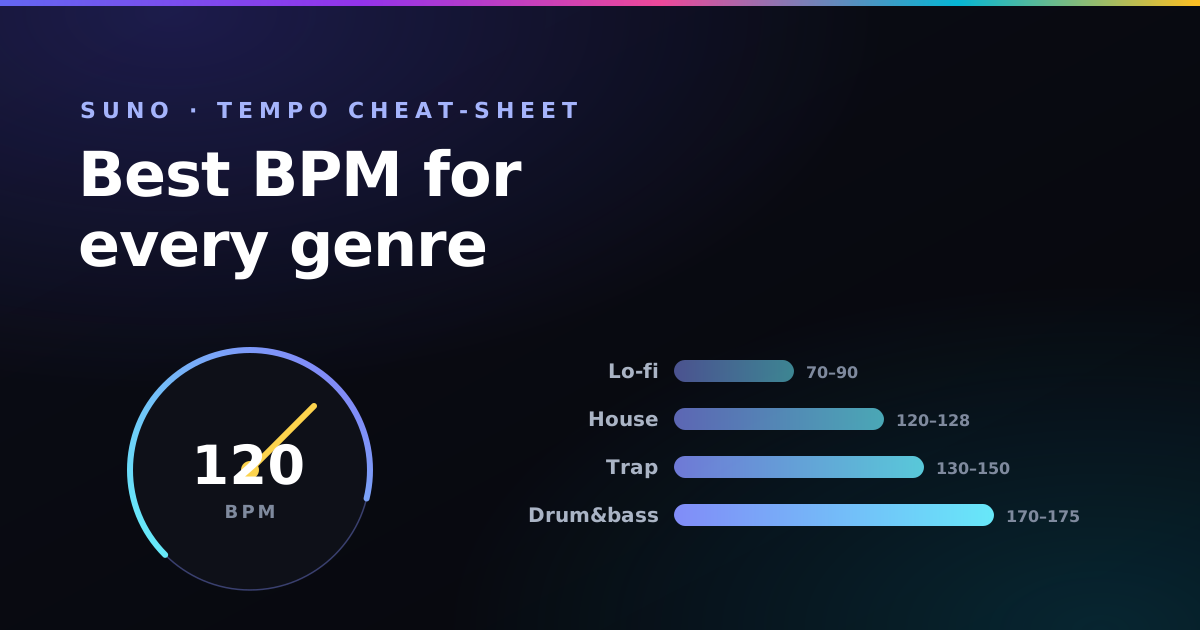
- Lo-fi hip-hop: 70–90 BPM · sweet spot 75
- Ambient / cinematic: 60–80 BPM · sweet spot 70
- Soul / R&B ballad: 60–80 BPM · sweet spot 72
- Trap (half-time feel): 130–150 BPM written, but it feels like ~70 — use 140
Mid-tempo & groovy (90–120 BPM)
- Hip-hop / boom bap: 85–95 BPM · sweet spot 90
- Indie / acoustic folk: 95–110 BPM · sweet spot 100
- Pop: 100–120 BPM · sweet spot 116
- Reggaeton: 90–100 BPM · sweet spot 95
Upbeat & danceable (120–140 BPM)
- House / disco: 120–128 BPM · sweet spot 124
- Synthwave: 100–120 BPM · sweet spot 110
- Rock / pop-punk: 130–160 BPM · sweet spot 140
- Techno: 125–135 BPM · sweet spot 130
Fast & high-energy (140+ BPM)
- Drum and bass: 170–175 BPM · sweet spot 174
- Hardstyle: 150–160 BPM · sweet spot 150
- Drill: 140–145 BPM · sweet spot 142
- Phonk: 130–160 BPM · sweet spot 145
The half-time secret: trap and a lot of modern hip-hop are written at a high BPM (around 140) but the snare lands on every other backbeat, so it feels slow and heavy. If a "70 BPM trap" prompt sounds limp, switch to 140 bpm, half-time feel instead.
How to lock the BPM into your prompt
Put the number right after the genre and mood, where Suno reads it with high priority:
Melodic house, uplifting, 124 bpm, warm analog bass, plucky synth lead, sidechain pump, wide stereo
You can also reinforce tempo through word choice — "driving," "frantic," and "racing" push faster; "slow," "spacious," and "drifting" pull back. When the adjective and the number agree, the result is far more consistent.
When the tempo still feels wrong
If vocals sound rushed even at the right BPM, the issue is usually lyric density, not tempo. Shorten your lines and add bracketed pauses — covered in our song-structure and vocal-tags guide. And if the whole track feels generic, your tempo might be fine but the rest of the prompt too vague; see the style-prompt formula.
Frequently asked questions
Does Suno actually understand a BPM number?
Yes. An explicit value like "120 bpm" in the style box reliably nudges the tempo. Pair it with the genre so the number and the feel agree.
What's a safe BPM for a pop song?
Around 100–120 BPM covers most modern pop. 120 feels upbeat and danceable; drop toward 100 for an emotional mid-tempo ballad.
Why does my track feel rushed or dragging?
Usually the BPM fights the genre — 150 BPM lo-fi feels frantic, 70 BPM drum-and-bass feels sluggish. Match the tempo to the genre's range, and if vocals rush, shorten lyric lines and add bracketed pauses.
Set tempo with a slider, not guesswork
The Suno Profiler in the free Paddy Prompt Studio includes a tempo control and genre presets, so the BPM and style stay in agreement automatically.
Open the Suno Profiler →