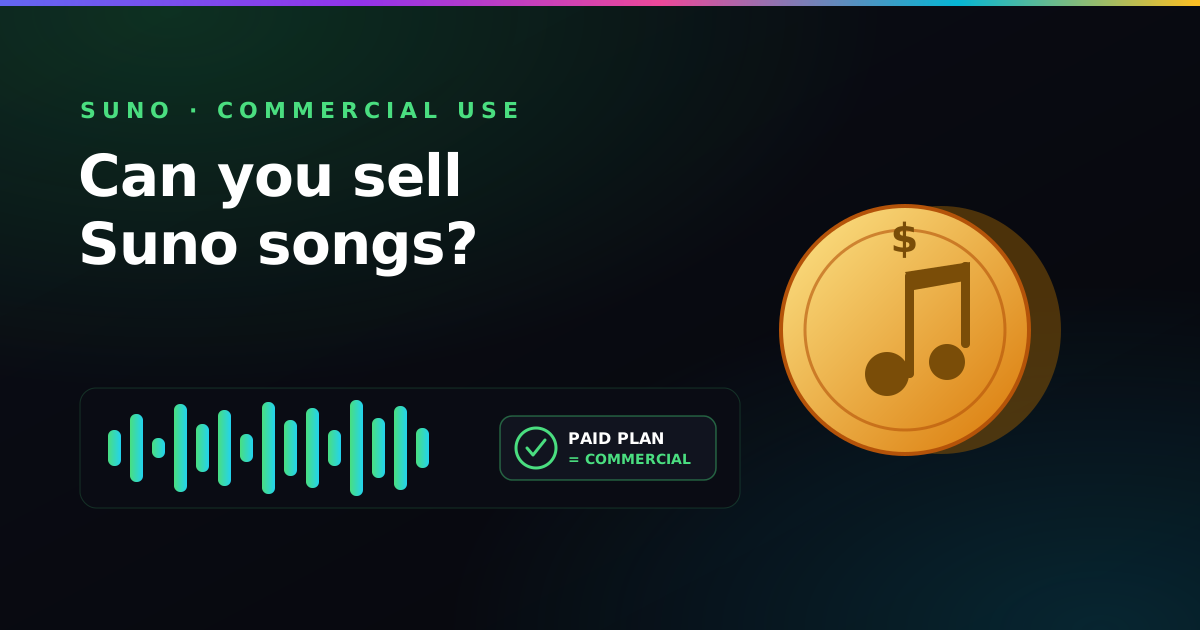
Yes, you can sell Suno songs if you generated them on a paid Suno plan, which grants commercial-use rights. Free-plan songs are personal-use only. You can release paid-plan songs on Spotify and YouTube through a distributor like DistroKid. Copyright is separate: purely AI-made audio may not be registrable in the US. Not legal advice; I just read the terms.
Short answer: yes, you can usually sell songs you make with Suno, but only on a paid plan. And “allowed to sell it” is not the same as “owning a copyright you can enforce.” Those two get tangled together constantly, like guitar leads behind an amp, so let's separate them.
The short version (two rules, one caveat)
- Paid plan: grants commercial-use rights — you can sell, license and monetize your generations
- Free plan: personal, non-commercial use only
- Copyright: a separate issue — purely AI-made audio may not be registrable in some countries
- Always: check Suno's current terms; this is guidance, not legal advice
1. Your plan decides whether you can sell at all
Suno's licence is tied to the plan you generated the song on. The free tier licenses tracks for personal, non-commercial use — fine for experimenting and sharing, not for selling. Paid tiers grant commercial-use rights to the songs you create while subscribed, which is what lets you put them on streaming platforms, license them, or sell them outright. A key detail people miss: it is the plan you held when you generated the song that matters. If you are weighing the tiers, the breakdown in is Suno free? covers what each plan includes.
2. Owning the output vs. owning a copyright
On a paid plan, Suno assigns you the rights it is able to grant in the output. That covers your relationship with Suno. It does not, by itself, guarantee a copyright — and that is a separate legal question decided by national law, not by Suno's terms.
In several jurisdictions, including the United States, a work needs meaningful human authorship to be registered for copyright. Audio generated entirely by an AI from a prompt may fall short of that bar, which can leave a track you are fully allowed to sell but cannot easily register or defend against copycats. The more human input you add — original lyrics you wrote, your own arrangement and editing, recorded vocals — the stronger the human-authorship argument becomes.
3. Monetizing on streaming and YouTube
With a paid plan you can distribute to Spotify, Apple Music, YouTube and the rest through the usual distributors (I use DistroKid as the example in my guides), and earn from streams and ad revenue. Two extra layers sit on top of Suno's licence: each platform's own AI-content policy, and some distributors' requirement that you disclose AI-generated material. None of that stops you monetizing, but read the policy of wherever you publish so a release isn't pulled later. Be realistic about the money, too: streaming pays fractions of a cent per play. This won't buy a boat. If you want the step-by-step, it's in how to release Suno songs on Spotify with DistroKid.
4. Staying on the safe side
The cleanest path to a sellable Suno track is simple. Generate on a paid plan. Avoid prompts that name a specific living artist or try to clone a recognisable voice — that is both against Suno's rules and the fastest way to produce something that resembles protected work. Don't paste in copyrighted lyrics. And add real human authorship where you can. For prompts that get a distinctive result without leaning on a famous name, see how to write a Suno style prompt and the list of Suno prompting mistakes to avoid.
This article is general information, not legal advice. AI music rights are evolving and vary by country — for anything high-stakes, confirm against Suno's current terms of service and consider speaking to a lawyer.
Where this comes from
- Suno’s Terms of Service and pricing page (suno.com), for what the free and paid plans license
- The U.S. Copyright Office (copyright.gov), for its guidance on human authorship and AI-generated works
- DistroKid (distrokid.com) and Spotify for Artists (artists.spotify.com), for release and AI-content rules
- My own experience making Suno tracks and reading far more terms of service than any hobbyist should
Last checked by Paddy on 24 October 2026. Terms of service get rewritten without warning, a bit like my setlists, so double-check before you pay for anything.
Frequently asked questions
Can you sell songs made with Suno?
Generally yes, if you made them on a paid Suno plan, which grants commercial-use rights to the songs you generate. Tracks made on the free plan are licensed for personal, non-commercial use only. Always confirm against Suno's current terms before you monetize.
Do you own the copyright to a Suno song?
On a paid plan Suno grants you ownership of the output it can grant. Separately, purely AI-generated audio with no meaningful human authorship may not qualify for copyright registration in some countries, including the US, which can limit your ability to enforce a copyright even when you are allowed to sell the track.
Can you monetize Suno songs on Spotify or YouTube?
With a paid plan you can distribute and monetize on streaming platforms and YouTube, subject to each platform's own AI and content policies. Some distributors and platforms require you to disclose AI-generated content, so check their rules too.
Is it safe to use Suno songs commercially?
The clearest path is a paid plan plus avoiding prompts that imitate a specific named artist or copy existing lyrics. That keeps you within Suno's licence and reduces the risk of a track resembling protected work. For anything high-stakes, get legal advice.
Can you sell a Suno song made on the free plan if you upgrade later?
No. Suno's commercial-use rights depend on the plan you held when you generated the song, so upgrading later doesn't cover tracks you already made on the free plan. Those stay personal-use only. To sell or release one on Spotify, remake it while you're on a paid plan.
Make something worth selling
The safest track to sell is an original one. The free Suno Profiler helps you build clean style prompts that don't lean on a famous artist's name, so your song stands on its own. Free, no signup.
Build an original Suno prompt →